Haridwar β Journey to the Holy Beginning
visit spots in Haridwar
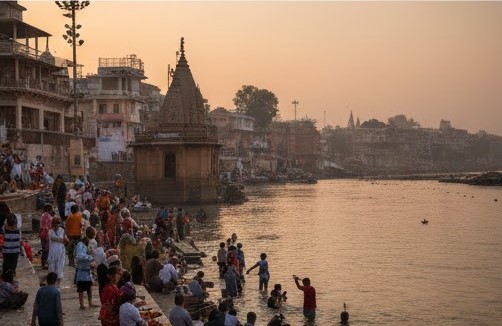
Har Ki Pauri is the most sacred and iconic ghat in Haridwar where thousands of devotees gather daily to take a holy dip in the River Ganga. The evening Ganga Aarti here is a magical experience filled with chants, lamps, and spiritual energy. It is believed that Lord Vishnu left his footprints here, making the place deeply revered among pilgrimMansa Devi Temple
Located on Bilwa Parvat in the Shivalik hills, Mansa Devi Temple is one of the most visited temples in Haridwar. Devotees reach the temple either by trekking or ropeway and enjoy panoramic views of the city and Ganga River from the top. The temple is part of the famous Siddh Peeth trio and is believed to fulfill devoteesβ wishes.
Perched on Neel Parvat hill, Chandi Devi Temple is another major spiritual destination in Haridwar. Visitors can trek through scenic routes or take a cable car ride to reach the temple. The peaceful surroundings and stunning hilltop views make the journey both spiritual and adventurous
ποΈ Spiritual & Cultural Heritage
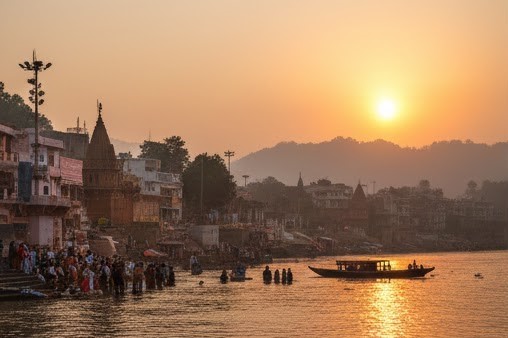
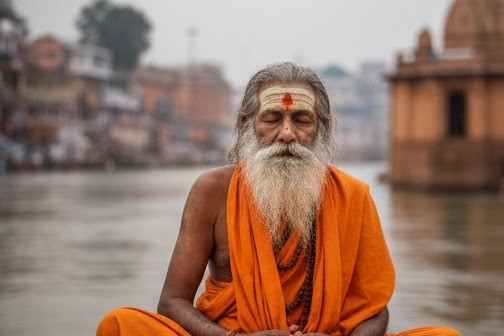
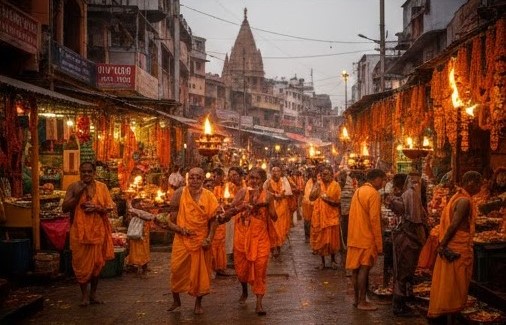
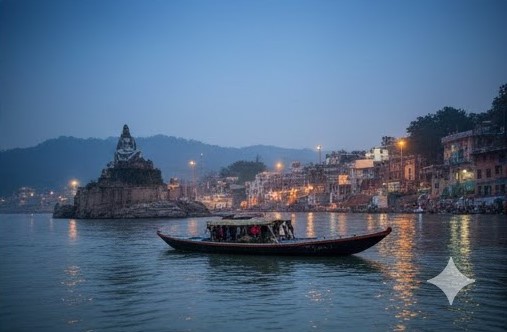
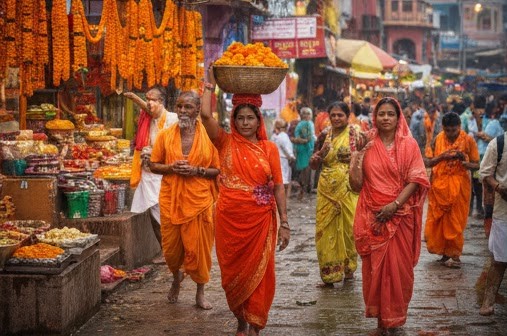
Haridwar is one of Indiaβs most sacred cities, where spirituality and culture blend beautifully into everyday life. Situated on the banks of the holy River Ganga, the city has been a center of devotion, pilgrimage, and tradition for centuries. Every sunrise begins with temple bells, chants, and the sight of devotees offering prayers by the river. The evening Ganga Aarti at the ghats creates a magical atmosphere filled with lamps, hymns, and spiritual energy. Pilgrims from across the country visit Haridwar seeking blessings, peace, and purification. Ancient temples, ashrams, and sacred rituals reflect the deep spiritual roots of the city. Festivals like Kumbh Mela, Diwali, and Navratri are celebrated with grand devotion and vibrant gatherings. The streets come alive with colorful markets selling religious items, handicrafts, and traditional sweets.
Ancient History of Haridwar
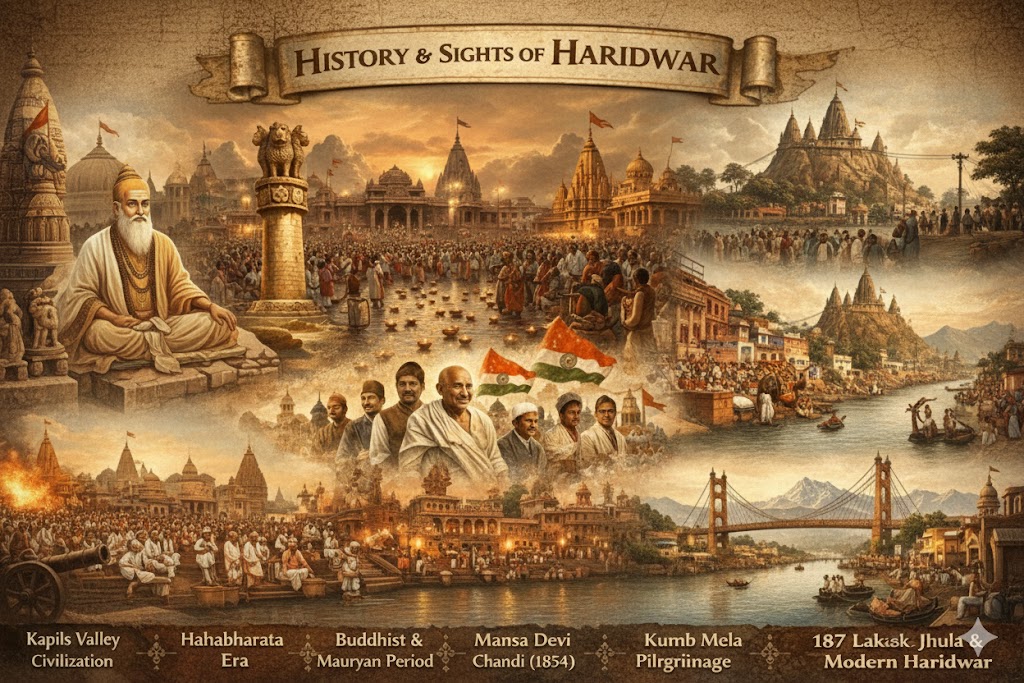
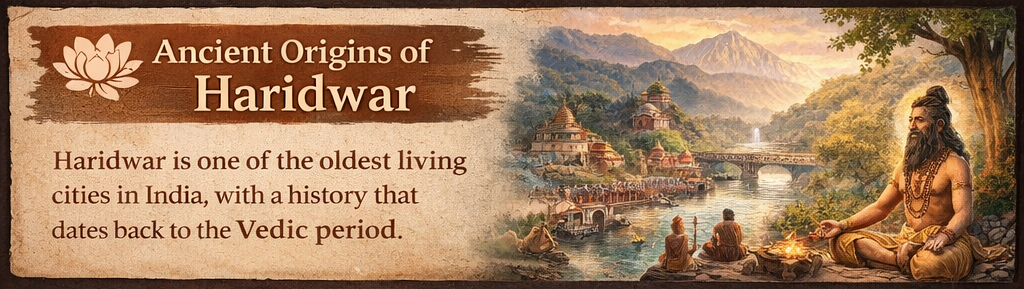
Haridwar is one of the oldest living cities in India and is deeply rooted in ancient Hindu history and mythology. The city is believed to be the gateway to the gods and the entry point to the sacred Himalayan pilgrimage routes. Its history dates back thousands of years to the Vedic period, when sages and rishis performed meditation and spiritual practices along the banks of the holy Ganga.
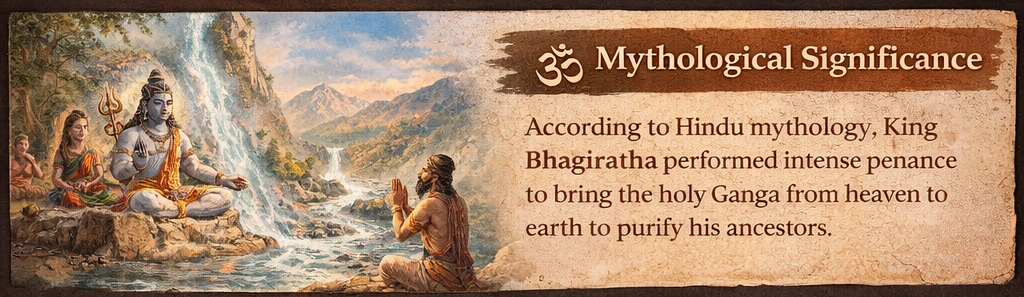
According to Hindu mythology, Haridwar is closely associated with King Bhagiratha, who is believed to have brought the sacred River Ganga from heaven to earth to purify the souls of his ancestors. Because of this divine connection, Haridwar became a sacred pilgrimage destination where devotees come to wash away sins and seek spiritual liberation.
In ancient scriptures such as the Puranas and the Mahabharata, Haridwar is referred to as Gangadwar, meaning βGateway of the Ganga.β It was considered one of the seven holiest cities (Sapta Puri) where attaining moksha (salvation) is believed to be possible. Saints, sages, and scholars lived here in ashrams, turning the city into a major center of learning and spirituality.
One of the most sacred ghats in Haridwar, Har Ki Pauri, is believed to be the spot where Lord Vishnu left his footprint. For centuries, pilgrims have gathered here to perform rituals, offer prayers, and witness the famous Ganga Aarti.
During the medieval period, Haridwar continued to flourish as a major pilgrimage and trade center. The city gained recognition under the rule of the Mughal Empire, particularly during the reign of Akbar, who respected the spiritual importance of the city and ensured the safety of pilgrims traveling to the region.
Later, during the British colonial era, Haridwar became an important administrative and religious center under the influence of the British East India Company. Infrastructure such as roads, canals, and railways were developed, making pilgrimage easier and increasing the flow of visitors.
From ancient mythology to colonial history, Haridwar has remained a timeless symbol of faith, spirituality, and cultural heritage, continuing to attract millions of pilgrims and tourists every year.







ποΈ Mythological Significance
According to Hindu mythology, King Bhagiratha performed intense penance to bring the holy Ganga from heaven to earth to purify his ancestors. Haridwar is believed to be the place where the sacred river first enters the plains, making it one of the holiest sites in India. The city is also counted among the Sapta Puri, the seven sacred cities believed to grant moksha (liberation).
π± Har Ki Pauri and Sacred Rituals
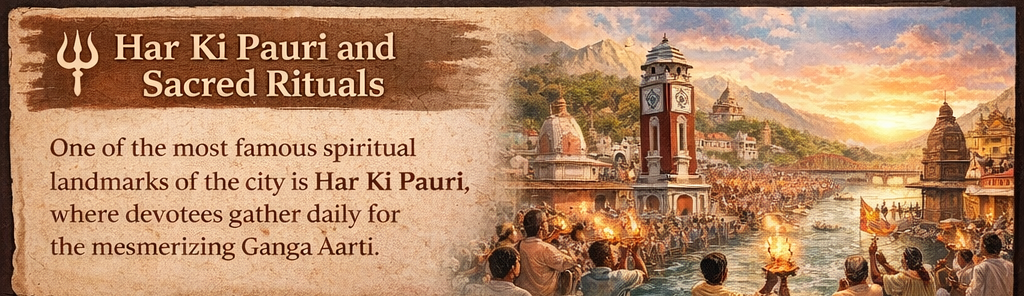
One of the most famous spiritual landmarks of the city is Har Ki Pauri, where devotees gather daily for the mesmerizing Ganga Aarti. It is believed that Lord Vishnu left his footprint at this holy ghat. For centuries, pilgrims have come here to take holy dips and perform rituals that symbolize purification and devotion.


π° Medieval Era and Pilgrimage Growth
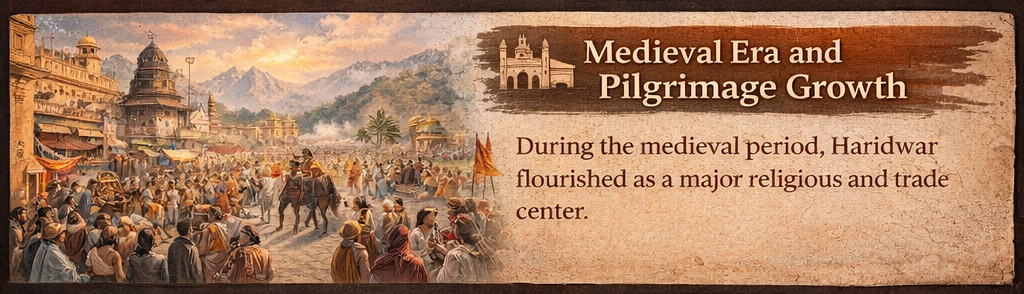
During the medieval period, Haridwar flourished as a major religious and trade center. Pilgrims from across India traveled through the city on their way to the Himalayan shrines. The Mughal emperor Akbar recognized the spiritual importance of the city and supported the safety of pilgrims visiting the region.
π British Colonial Influence
Under the rule of the British East India Company, Haridwar saw major infrastructure development. Roads, railways, and canals were built, making travel easier and increasing the number of visitors. The city gradually evolved into both a religious and administrative hub during this period.
π Modern Haridwar
Today, Haridwar continues to be one of Indiaβs most important pilgrimage destinations. Millions of devotees visit every year for religious festivals, spiritual retreats, and cultural experiences. Despite modernization, the city still preserves its ancient traditions and sacred atmosphere, making it a timeless symbol of faith and devotion.


Numbers That Define Haridwar
Plan Your Journey to Haridwar
By Road β Well Connected Highways
Β

Haridwar is easily accessible by road from major North Indian cities like Delhi, Dehradun, Rishikesh, and Chandigarh. Regular state transport and private buses operate daily, along with taxis and self-drive options. The journey from Delhi takes around 5β6 hours via NH334, making road travel a popular and scenic choice for pilgrims and tourists.
By Rail β Haridwar Railway Station
Β

Haridwar Junction is a major railway station with excellent connectivity to cities like Delhi, Mumbai, Kolkata, Varanasi, and Jaipur. Many express and superfast trains run daily, making train travel affordable and convenient. The railway station is located close to the city center and easily connects to hotels and pilgrimage spots.
By Air β Nearest Airport (Dehradun)
Β

